Punta Cana vs. Cancun: Which Caribbean Lifestyle is Right for You?
The choice between buying property in Punta Cana or Cancun often comes down to lifestyle preference. Cancun offers a vibrant, public-facing city experience, while Punta Cana, especially within exclusive communities like Cap Cana, provides a more private, self-contained resort environment. For buyers seeking the latter, Crystal Garden offers a clear example of the Cap Cana model, with golf-front residences set inside a secure, amenity-rich enclave.
How does the atmosphere differ for a resident?
The most significant difference between Cancun and Punta Cana is the fundamental atmosphere. Cancun's famous Hotel Zone is a high-energy strip of hotels, shopping malls, and nightclubs, largely open to the public and bustling with activity day and night. It’s an urban environment set against a Caribbean backdrop, ideal for those who thrive on constant energy and public access to a wide array of amenities.
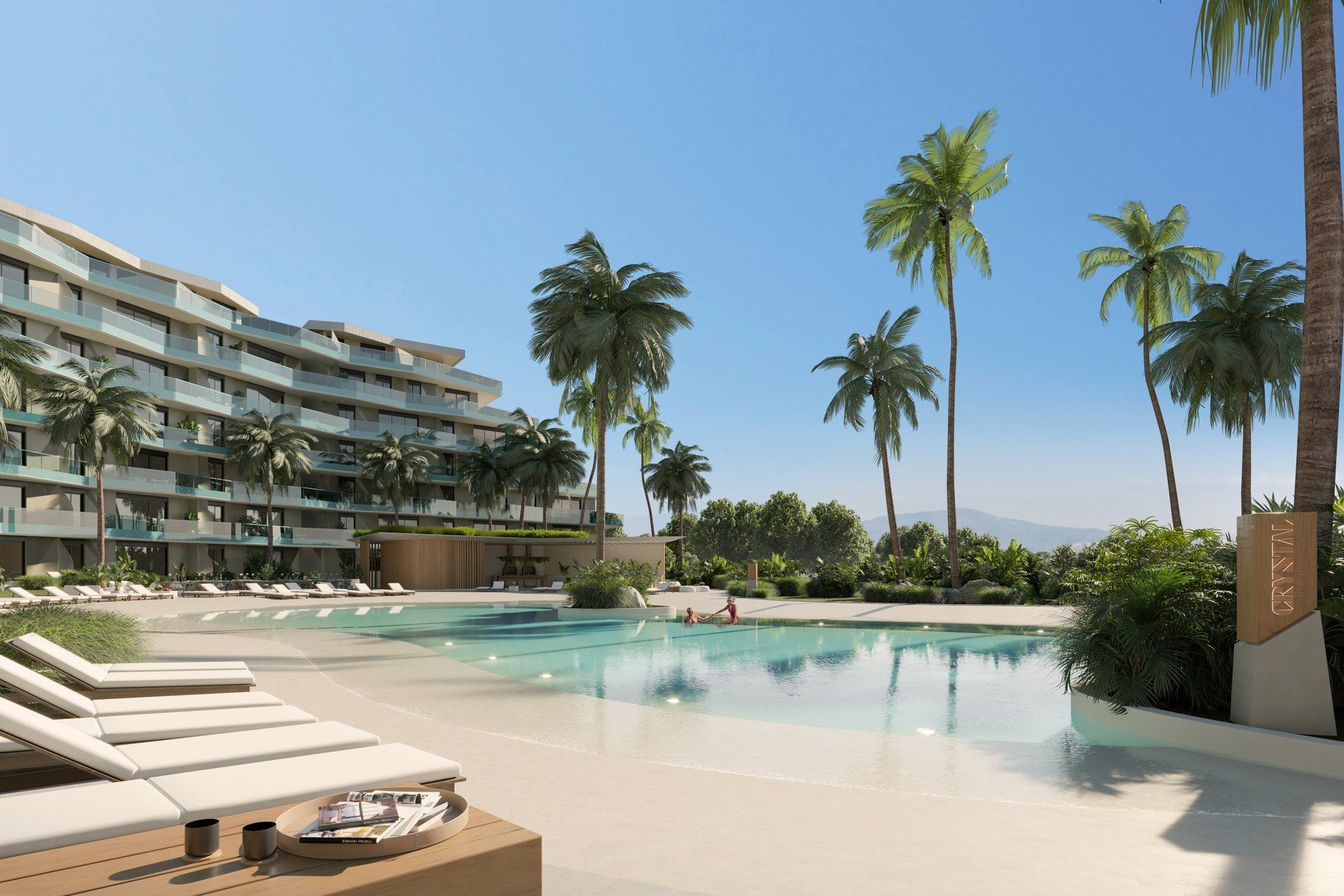
Punta Cana, and specifically Cap Cana where Crystal Garden is located, offers a contrasting vision. It is structured as a collection of private, master-planned communities. Life here is more akin to living in a high-end, self-contained resort. Access is controlled, security is private and layered, and the environment is designed for tranquility and exclusivity. Instead of a public strip, you have amenities like golf courses, marinas, and private beach clubs integrated within the gated community itself. This model appeals to buyers who prioritize privacy, security, and a more relaxed, curated lifestyle over the spontaneous energy of a public city.
What are the property ownership laws and tax benefits for foreigners?
Both Mexico and the Dominican Republic permit foreigners to own property, but the legal frameworks and tax incentives differ significantly. In the Dominican Republic a foreign buyer can hold freehold title directly, in their own name — Crystal Garden publishes 100% foreign ownership. We are not going to characterise the statute beyond that, in either country; the position that governs your purchase is the one your attorney confirms in writing.
Furthermore, the Dominican Republic offers a powerful incentive program under Law 158-01, known as CONFOTUR. Projects with this designation, like Crystal Garden, grant their first buyers significant tax exemptions. These include an exemption from the 3% transfer tax at purchase, and the law's fifteen-year exemption from the 1% annual property tax (IPI) for qualifying projects — a term written for the project rather than a period any individual owner should count on, which is a distinction worth raising with your attorney rather than assuming. The IPI in any case bites only on value above an annually adjusted threshold. The benefits attach to the property and are not automatic: they have to be filed for and recorded on the title at closing.
Mexico's coastal restricted zone is commonly described as requiring foreign buyers to hold through a bank trust — a fideicomiso. We could not source the mechanics or the costs of that to anything authoritative, so this page stops at naming it. It would be easy, and dishonest, to characterise an arrangement we have not verified in a comparison written from the Dominican side; if Cancún is genuinely on your shortlist, get that half from a Mexican notary or attorney rather than from us.
How do the community designs compare?
The design philosophy of each destination shapes the resident experience. Cancún is a developed city that separates its residential districts from the tourist-focused Hotel Zone. Cap Cana is an integrated resort community where homes and amenities sit inside one gated plan. The differences that follow from that are structural, and they are the ones a resident actually feels:
- Where the amenities are. In Cancún they are largely public and reached by leaving home; in Cap Cana they sit inside the community and access is controlled.
- Who maintains the setting. A city runs on municipal services; Cap Cana's roads, landscaping and security are run by the community itself.
- What the surroundings do at night. A hotel strip is busy by design; a gated residential plan is not.
- How much separation there is between resident and visitor. Cancún mixes them along the same strip; Cap Cana keeps residential areas behind controlled access.
Which of those reads as a benefit is entirely a matter of what you want, and nothing above is a claim that one place is better run than the other.
| Feature | Cancun | Punta Cana (within Cap Cana) |
|---|---|---|
| Community Model | Urban city with a public hotel zone | Private, gated master-planned community |
| Primary Lifestyle | High-energy, public, bustling | Tranquil, private, exclusive |
| Security | Standard municipal policing | Gated access, private patrols, and a dedicated Tourist Police force (Politur) |
| Amenities | Spread across the city; public access | Self-contained within the community; often private for residents |
| Example at Crystal Garden | N/A | On-site spa, rooftop pool, gym, restaurants, and direct golf-course frontage |
What about hurricane preparedness and building standards?
Both destinations are located within the Atlantic hurricane season belt, which officially runs from June 1 to November 30. Consequently, modern construction in both regions is designed with storm resilience in mind. The Dominican Republic has a national building code carrying a mandatory wind-load requirement for new construction. What that establishes is a legal floor across the country — it is not a statement about how any particular building performs, and this page makes no claim about which edition of the code governs Crystal Garden: delivery is scheduled for August 2027, we have not seen the project's permit record, and a delivery date does not establish a permitting date. Ask the developer directly which code edition the permits were issued under. On the Mexican side we hold no sourced material on building standards at all, so nothing here should be read as a comparison of the two.
How does Crystal Garden exemplify the Cap Cana lifestyle?
Crystal Garden is one example of the Cap Cana model, with residences starting from $475,000. The project is situated directly on the Las Iguanas golf course, with every residence offering fairway views. It’s a short walk (approximately 1,800 feet) to Playa Caracol, blending golf-front living with beach proximity.
Developed by Gesproin Group, its amenities — the spa and wellness centre, the rooftop pool, the restaurants — sit on site rather than along a public strip. Combined with Cap Cana's controlled access and the project's CONFOTUR status, that is the shape of what is on offer here; whether it suits you better than a city is the question this page cannot answer for you.
Common questions
- Is it easier to travel to Punta Cana or Cancun?
- Punta Cana (PUJ) and Cancún (CUN) both have major international airports; PUJ is served by direct flights from North America and Europe. The choice often depends on your specific departure city. From Crystal Garden, Punta Cana International Airport is conveniently located only about a 20-minute drive away.
- Can I get residency in the Dominican Republic by buying property?
- There is a residency-by-investment programme, reported to carry a US$200,000 minimum — several sources agree on that figure, but the government's own page was unreachable when we checked it, and a separate figure of US$500,000 circulates for real estate specifically. Underneath the numbers, whether buying a condo counts toward the programme at all is unsettled. So no: this page will not tell you that a purchase here qualifies you, and you should be wary of one that does. It is a question for an immigration attorney, under the rules in force when you apply.
- Which location has better tax incentives for property owners?
- For a qualifying Dominican property such as those at Crystal Garden, CONFOTUR exempts the 3% transfer tax, and the law provides a fifteen-year IPI exemption for qualifying projects. We cannot answer the comparative half of this question honestly: we hold no sourced figures on Mexican property taxation, so calling either country's regime better would be an assertion with nothing behind it.
Want the details for your own situation?
Ask about availability, layouts or the buying process, and someone from the sales team will get back to you.
Get in touch