Punta Cana Restaurants, From a Cap Cana Address
Almost everything written about restaurants in Punta Cana is addressed to a guest on a package holiday, weighing up whether to leave the resort at all. An owner asks something else. Crystal Garden's 196 residences sit inside Cap Cana, delivered finished and ready for the optional managed rental program, with one parking space per residence. Somebody who owns here is a resident rather than a guest on a wristband, and that alone turns dining from a fixed arrangement into a map you learn in layers. This page describes the layers. It names areas and types, never individual venues, because nothing in this site's fact base can vouch for one kitchen's cooking, prices or opening hours next season.
What is within reach without leaving Cap Cana?
The first layer is the community itself. Cap Cana's inland marina is where dining inside the gates is concentrated, and the nearest such concentration to Crystal Garden. This page does not list the venues there: nothing in this site's fact base can vouch for what those kitchens cook or charge, and a stale list is worse than none.
Around it sit the golf clubhouses and the hotel dining rooms inside the community. Whether a resident may book one, and on what basis, is set by each operator rather than by any development — a phone call, not an assumption.
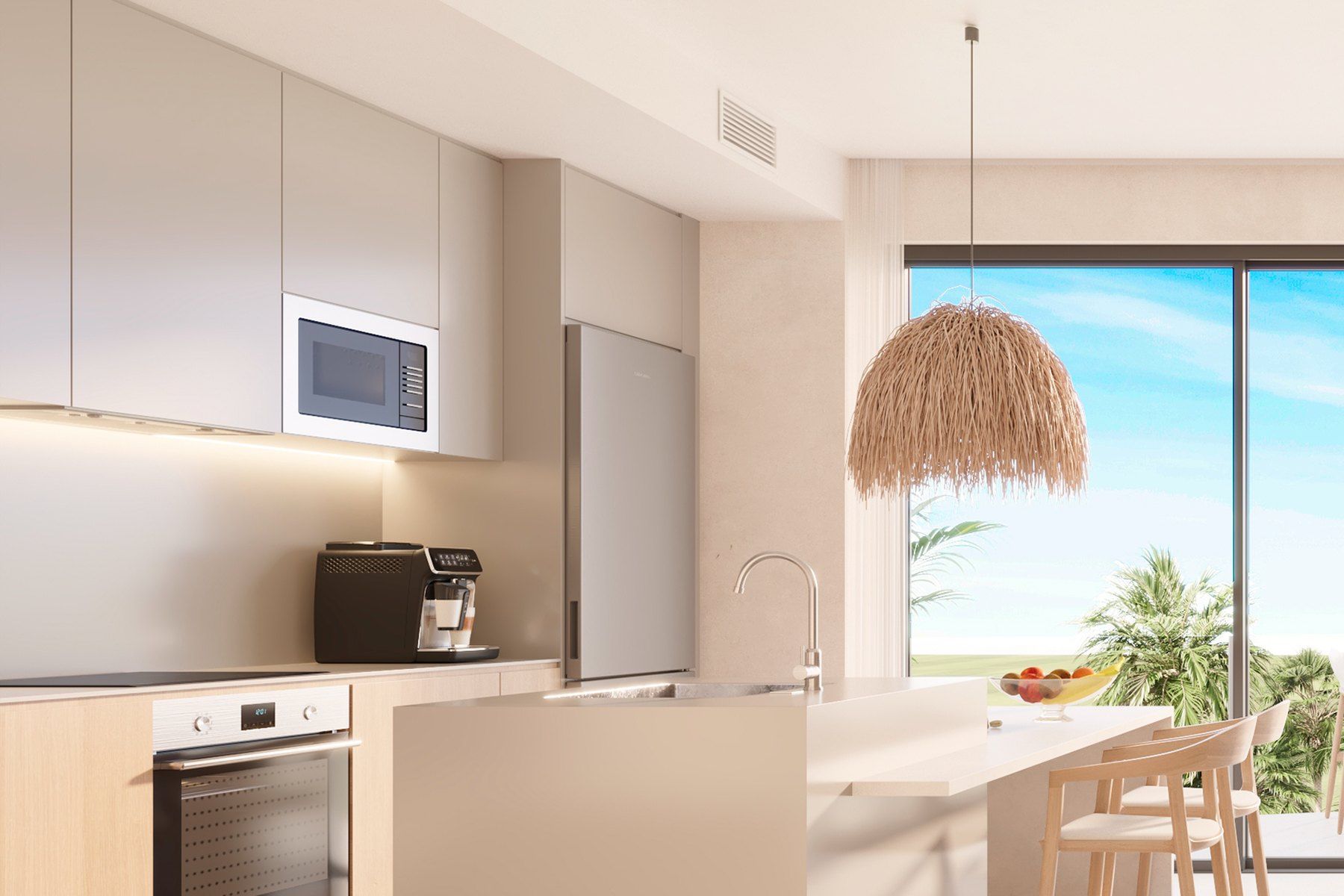
Crystal Garden's own plans include on-site restaurants and barbecue terraces, with delivery scheduled for 2027. Treat those as part of the building being bought, not as tables to reserve this month.
Resort dining and independent restaurants are not the same product
An all-inclusive resort sells meals as part of a package, and that shapes how its restaurants behave: the a la carte rooms are usually reservation-gated for house guests, the menus are built for a population that rotates weekly, and whether an outside visitor can eat there at all is the property's own policy that season.
An independent restaurant works the other way round. Its regulars are residents and repeat visitors, so it keeps its own hours, changes the board with what came off the boats or in from the market, and some shut for a stretch in the quiet months.
As an owner you become a customer of the second kind by default, and that is the real shift: the resort dining room turns into one option among many rather than the whole of the map.
The casual end: Bavaro and El Cortecito
Head out toward Bavaro and the register changes completely. El Cortecito and the beachfront around it are the informal end — sand under the tables, fish and shellfish cooked plainly, a board instead of a menu, and a crowd that is public in a way a gated community is not.
Two practical things follow. Kitchens there often wind down earlier than the bars, so an unplanned late arrival can find the grill cold. And the strip fills at weekends and through the high season, which is exactly when turning up without a booking becomes a wait.
It is worth the drive because it is unlike home. Eat only inside Cap Cana and you end up with a narrower version of the country than the one you bought into.
Eating Dominican: the comedor and the plates worth knowing
The layer most owners reach last is the everyday Dominican one: the comedor, a small family kitchen cooking a short list well, where lunch rather than dinner is the main meal. Menus are rarely bilingual, and a little Spanish is the quickest way to stop being treated as a visitor.
Four plates are worth recognising before you order:
- La bandera dominicana — rice, stewed beans, a braised meat and a little salad; the national everyday lunch.
- Mofongo — fried green plantain mashed with garlic and crackling, plain or built around shrimp or chicken.
- Sancocho — a thick, slow stew of several meats and root vegetables, cooked for company and for rain.
- Pescado frito — whole fried fish with tostones, the standing order where the catch comes ashore.
Add the colmado, the corner shop that also pours a cold beer, and you have the half of eating here that no resort menu contains.
Provisioning, and the practical notes nobody puts in a review
Eating well as a resident is only half restaurants. The other half is the shopping, because an owner buying groceries is a resident rather than a guest — and homes here are handed over finished and ready for the optional managed rental program. The rhythm becomes two habits: a periodic run to a large supermarket for imported and familiar brands, and short, frequent stops at a colmado or a produce stand for bread, fruit, eggs and whatever fish came in that morning.
Three notes save the most trouble. Book ahead at weekends and in high season, and treat a quiet weeknight as permission to walk in anywhere. Read the bill before adding to it: restaurants here add a 10% service charge, the propina legal, as a line of its own beside the 18% ITBIS — widely documented, worth confirming locally. And carry pesos even where cards are taken — the further from the tourist corridor, the more that matters.
Common questions
- Will Crystal Garden have restaurants on site?
- The development's plans include on-site restaurants and barbecue terraces for residents, and delivery is scheduled for 2027, so they are part of what is being built rather than places to book today. Until then — and afterwards, for anything beyond a meal at home — the nearest options are the ones inside Cap Cana, starting at the marina.
- How do owners get to dinner outside Cap Cana?
- By vehicle, in practice. Cap Cana is laid out for driving rather than walking, and the gaps between its neighbourhoods are not pedestrian ones. Residents cross the community itself by car or golf cart, then swap to a taxi or a ride-hailing app for an evening toward Bavaro that ends late. Arrive without transport of some kind and the choice narrows to whatever sits within walking reach of the door, which does not make a long list.
- What does a meal cost around here?
- No figure appears on this page, and that is deliberate. Nothing in the fact base behind this site records restaurant spending in the area, and the honest answer moves with the season, with the exchange rate and with whether the kitchen sits inside a resort. What can be described without inventing anything is the shape of the spread: imported goods and resort settings at one end, neighbourhood kitchens and market produce at the other, further apart than new arrivals expect. Add the 10% service charge and the 18% ITBIS a restaurant bill carries, and the total lands a little above the menu.
- Is a tip expected on top of the bill?
- Read the bill first. Dominican restaurants add a 10% service charge — the propina legal — as a line of its own beside the 18% ITBIS, and it is not discretionary, so anything further is a choice rather than a correction. The part worth knowing as a resident is that reporting is consistent that the 10% does not reliably reach the individual server, which is why leaving something directly, in cash and in pesos, is customary on top. Treat this as the widely-documented convention rather than a statute this page can cite by number, and confirm locally anything that turns on it.
Want the details for your own situation?
Ask about availability, layouts or the buying process, and someone from the sales team will get back to you.
Get in touch