Getting married in the Dominican Republic: the paperwork in the order it happens, for a Crystal Garden couple
Couples usually plan a Dominican wedding from the setting backwards. The paperwork runs the other way. It begins in your own country, passes through a Dominican civil registry office, and ends back at home, where some governments want the marriage recorded before it counts for every purpose. This guide sets those steps out in sequence for a couple using a residence at Crystal Garden in Cap Cana as their base, and shows where the rules change for French, British and German passports.
What actually makes you married here?
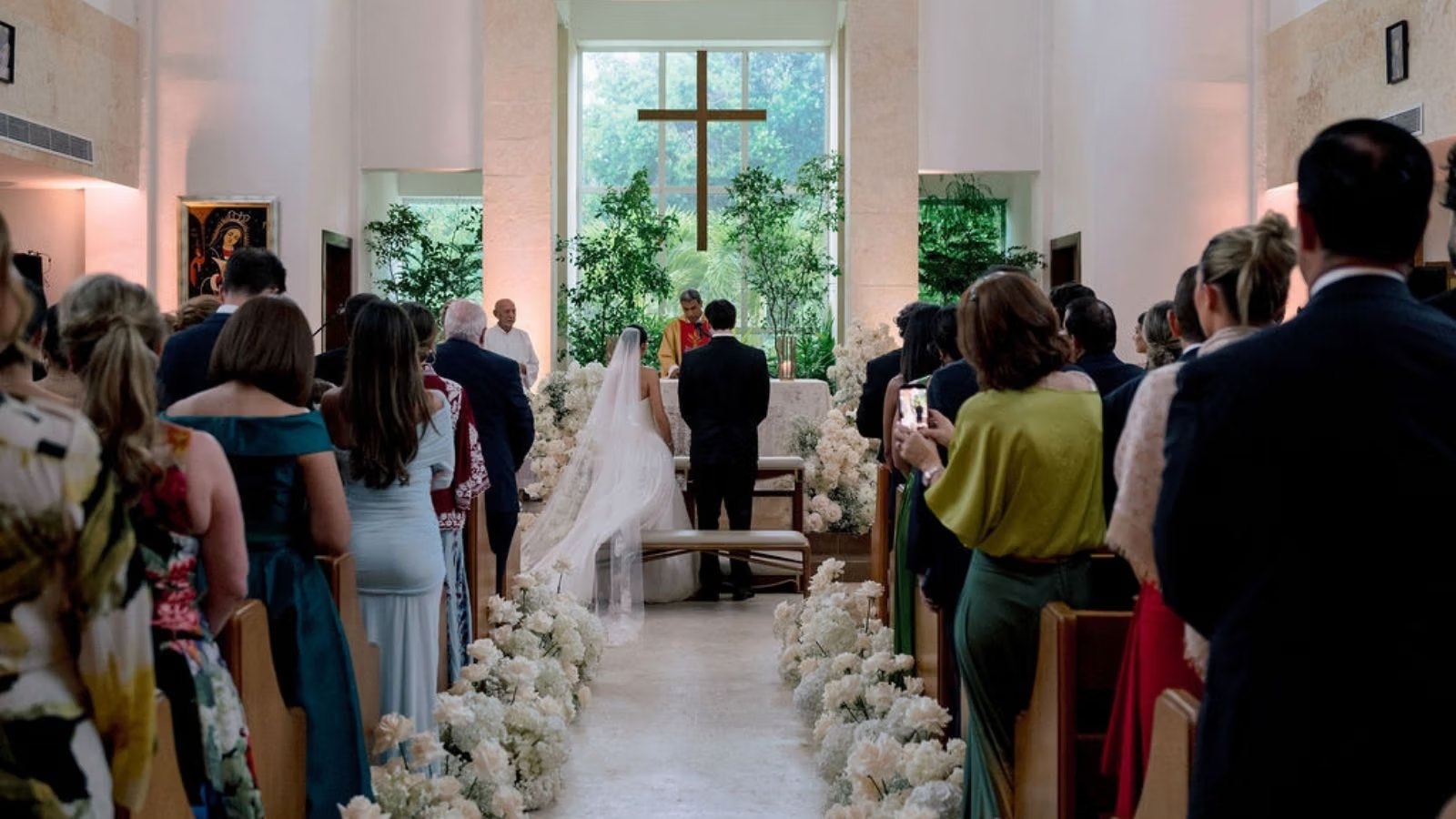
Only two ceremonies have legal effect in the Dominican Republic. The first is a civil wedding conducted by a civil registry officer, the Oficial del Estado Civil, in Spanish and in front of two witnesses. The second is a Catholic church wedding: a published legal guide says the priest reports it to the civil registry within 3 working days, which gives it civil effect, although the parish adds paperwork of its own.
Everything else, a vow renewal on the sand or a ceremony led by a friend, is a celebration. That is a perfectly good choice: many visiting couples sign at a registry office at home and keep the Dominican day for the guests. Two firm rules apply whichever route you take. Since a 2021 law (Ley 1-21), nobody under 18 may marry in the country, and a foreign partner's nationality is no bar to a civil wedding.
Step one happens at home: the papers you carry
Each foreign partner is generally asked for a valid passport, a long-form birth certificate and a sworn declaration of single status, plus a divorce decree or a former spouse's death certificate where that applies. Those documents are issued in your own country, so that is where they are prepared. The Dominican Republic has applied the Apostille Convention since 2009, so each paper is apostilled where it was issued.
Then comes Spanish. In Dominican practice a translation for official use is made by a judicial interpreter, whose signature is legalised at the Procuraduría General de la República. Requirements shift, so confirm the current list with the office that will marry you. One Dominican law firm advises couples to begin collecting documents at least six months ahead, and that is realistic once apostilles and translations are counted.
What France and the UK ask before the wedding
Some home countries have a step that must come first. A French national marrying abroad asks the French embassy or consulate for the country of the wedding for a certificat de capacité à mariage. The bans are then published for 10 days unless a dispensation is granted, and the French government's own guidance says the ceremony may take place only once those 10 days have run. Build that into the timetable before any date is printed on an invitation.
For British nationals, GOV.UK says whether you can marry abroad depends on local law, and a partner may need proof of being free to marry. GOV.UK also lists the British Embassy in Santo Domingo as a post where a same-sex couple can have a consular marriage, a route for couples whom local law does not allow to marry. Its conditions are specific: a partner must have lived in the country for 7 full days before giving notice, the notice is displayed for 14 days, and the ceremony must take place within 3 months of the first appointment. Ask the embassy whether you qualify before planning around it.
The Dominican civil ceremony and what it costs
With the documents ready, the officer can marry you in the registry office or travel to another place. When both partners are foreigners not resident in the Dominican Republic, the civil-registry tariff, as two Dominican sources reproduce it, is RD$20,000, and it is the same in the office or outside it. Treat that as the published figure to confirm with the office, not as a quote.
After the ceremony the registry issues the Dominican marriage certificate, the acta de matrimonio. For use abroad it is apostilled by the Ministry of Foreign Affairs, which authenticates the registry's signature. Ask for more than one certified copy while you are in the country: every office at home that needs to see the marriage will want its own.
After the wedding: making it count at home
This is the step couples forget, and the rules differ more than people expect:
- France. Ask the competent French embassy or consulate to transcribe the marriage into the French civil-status registers. It is not compulsory but it is recommended, the request has no deadline, and until it is done the marriage has no effect for third parties. The prosecutor may oppose a transcription within 2 months of receiving the file.
- Germany. The German Embassy in Santo Domingo says a marriage validly celebrated here is automatically valid in Germany, and registering it is voluntary. If you do register, Dominican certificates are legalised by the embassy rather than apostilled, must be no more than three months old, and first need a validation label from the Junta Central Electoral.
- United Kingdom. A marriage abroad is recognised if it was lawful where it took place. There is no UK certificate for it, so the apostilled Dominican certificate is the document you keep.
- Canada. Canada's travel advice says marriages legally performed abroad are usually valid there and do not need to be registered in Canada.
Whatever your passport, check with your own registry office before you travel which translation and certification it wants. Both are far easier to arrange while you are still in the Dominican Republic.
Planning the wedding week from Crystal Garden
Crystal Garden is planned as 196 residences in Cap Cana, beside the Las Iguanas golf course, with delivery projected for 2027, and Punta Cana International Airport is about 20 minutes away. For a wedding that means guests arriving on international flights can reach the residence on the day they land, and a registry officer can be asked to travel to a setting in Cap Cana rather than having the party drive to an office.
If the couple will buy or own property together, settle one legal question before the ceremony rather than after it. Under Dominican private international law (Ley 544-14, Articles 43 and 44), the property relations of a married couple follow the law of their personal relations unless they agree otherwise, and before marrying they may choose in writing the law of either spouse's nationality or domicile. A Dominican attorney can draft that choice at the same time as the wedding papers.
Common questions
- Can two foreigners get married in the Dominican Republic?
- Yes. Nationality is not a bar and neither partner needs Dominican residence. The civil wedding is held before an Oficial del Estado Civil, in Spanish, with two witnesses; each foreign partner usually brings a passport, a long-form birth certificate and a sworn single-status declaration, apostilled and translated into Spanish.
- How much does a civil wedding cost in the Dominican Republic?
- When both partners are foreigners living abroad, the civil-registry tariff reproduced by Dominican sources is RD$20,000, whether the officer marries you in the office or travels to another place. Apostilles, translations and any planner are extra; confirm the current tariff with the office that will marry you.
- Do French citizens need anything before marrying in the Dominican Republic?
- Yes. They ask the French embassy or consulate for a certificat de capacité à mariage; the bans are published for 10 days, and the wedding can take place only after that. Transcribing the marriage afterwards is recommended: without it, the marriage has no effect for third parties in France.
- Is a Dominican marriage valid in Germany and the UK?
- The German Embassy says a marriage validly celebrated in the Dominican Republic is automatically valid in Germany, and registering it there is voluntary. GOV.UK says a marriage abroad is recognised in the UK if it was lawful where it took place, although no UK certificate is issued for it.
Want the details for your own situation?
Ask about availability, layouts or the buying process, and someone from the sales team will get back to you.
Get in touch