Punta El Cortecito, and What Is Actually There
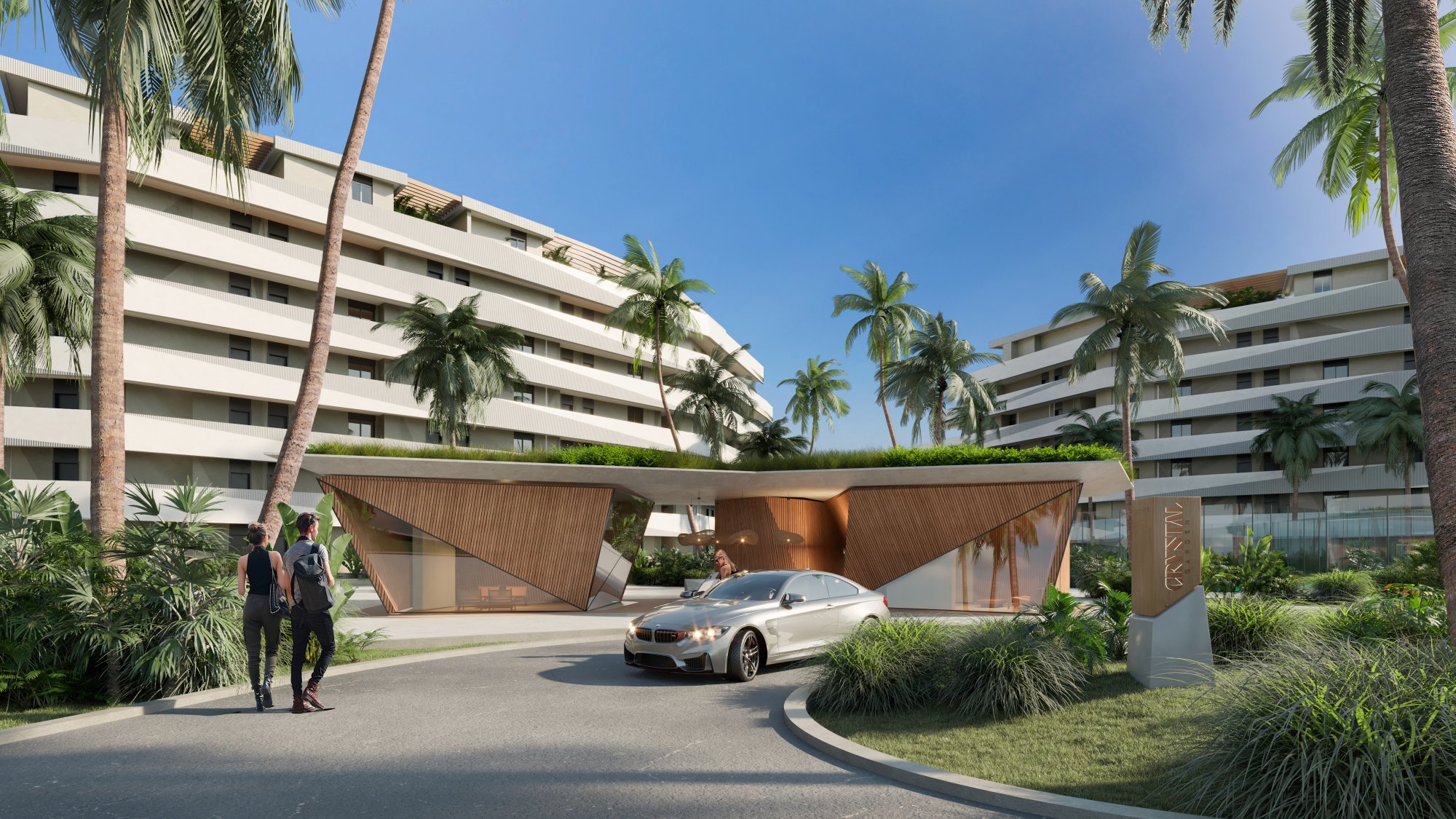
People search for Punta El Cortecito for one of two reasons: they have seen the name attached to a hotel or an apartment listing and want to know where it is, or they have been told it is the part of this coast that still belongs to a town rather than to a resort. Both deserve a straight answer. This guide is written from the far end of the same shoreline — Crystal Garden's 196 residences sit inside Cap Cana, on the Las Iguanas golf course — so El Cortecito here is somewhere you drive to rather than somewhere you live, and that distance is the reason to describe it honestly instead of selling it.
The name is several names, and none of them marks a headland
You will find the same place written as Punta El Cortecito, Playa El Cortecito and simply El Cortecito, and often folded into Los Corales, the neighbourhood that runs south from it. These are not four different places. They are one small former fishing settlement on the east coast of the Dominican Republic, the beach in front of it, and the residential streets that grew up behind.
The word punta in the search term is the misleading part, because nothing here juts out into the sea. This run of shore is close to straight, and the genuine corner of the island lies well to the south, where the coast turns at Cabo Engaño. What makes El Cortecito a landmark is not a headland. It is a change in who owns the ground behind the beach.
It has no edges either. No gate, no ticket, no published boundary — you walk out of one sector and into the next without anything announcing it, which is why two people can use the name to mean stretches of sand that barely overlap.
What sits behind the sand is the whole difference
Begin with the part that does not change anywhere on this coast: the sand. Ley 305 of 1968 places the shoreline strip measured inland from the high-tide line in public hands — roughly the first 200 feet of it — and it cannot be sold, fenced or converted into private beach. That is exactly as true in front of an all-inclusive as it is here. A hotel beach is not private property, whatever the row of loungers implies.
What differs at El Cortecito is the land behind that strip, and that is the whole of the difference. Along most of this shoreline the ground behind the beach is one operator's grounds, so the public sand is reached through someone's property, with the path, the parking and the furniture lawfully under their control. Here the land behind is a town: streets, small hotels, apartment buildings, shops. The sand is no more public than the sand two miles north of it. It is simply attached to somewhere you can arrive at without walking through a reception.
Two cautions follow. The strip is measured from the tide line, so its inland edge moves with the sea rather than sitting on a fixed survey line. And public ownership of sand settles nothing about how you reach it — never assume a walking route exists anywhere on this coast because a map looks short.
The strip, band by band
Seen from the water, El Cortecito arranges itself into bands, and knowing them saves a lot of aimless walking. The useful thing to carry is the pattern rather than a list of businesses: individual bars and stalls open, close and change hands faster than any page can track, while the arrangement below has been stable for years.
The register is informal all the way through. A price is negotiated more often than printed, a menu is often a board, and the same few streets are used by residents doing their shopping and by visitors doing nothing at all. That mixture is what people mean when they call this the Dominican end of the coast — and it is also why it is louder, busier and less tidy than a hotel beach.
| Band | What is in it |
|---|---|
| The waterline | Open sand with several walk-in entrances rather than one controlled gate, small boats drawn up between swimmers, and vendors working along the tide line. |
| The beachfront | Informal open-sided restaurants and bars with sand under the tables, fish and shellfish cooked plainly and often in sight of the water. |
| The first street back | Craft and souvenir stalls, colmados and mini-markets, a pharmacy, a bakery, a cash machine — the everyday errands a resort keeps inside its own walls. |
| Further inland | Residential streets of apartment buildings, villas and small hotels running back from the beach, continuous with Los Corales to the south. |
The boats are the part that tells you the truth
The single feature that separates this stretch from the resort frontage either side of it is that boats are drawn up on the sand. El Cortecito grew as a fishing settlement before the hotels arrived, and although tourism replaced fishing long ago as what the place lives on, the beach is still somewhere boats leave from — small craft going out early, and excursion boats that load passengers off the sand rather than from a dock.
Two practical consequences. The beach is used rather than staged, so expect engines, rope, people working while you swim, and a shoreline that is not raked smooth by anyone at dawn. And the hour you choose changes what you get: early is quiet and functional, and from late morning onwards the strip is at its busiest.
If what you want is a shoreline where nothing commercial happens in front of you, this is the wrong sector and a quieter stretch further along the coast will suit you better. If you want to watch a working beach from a plastic chair while lunch is cooking, it is precisely right, and no gated shore will give you the same thing.
Getting there from Cap Cana, and what the drive buys
From Crystal Garden this is an outing rather than a walk, and it is worth saying plainly, because beach-adjacency is the claim buyers most often accept without checking. What this development publishes are its own distances: Playa Caracol about 1,800 ft away, roughly a ten-minute walk; Juanillo Beach 8 minutes by car; Punta Cana International Airport around 20 minutes; Downtown Punta Cana about 30. El Cortecito is further again, north up the coast past the corner the island turns at, and no drive time to it is published here — so this page puts no figure on it. Ask for a door-to-door time measured on a weekday afternoon rather than accepting one from a brochure.
What the drive buys is a register a gated community cannot produce: entrances anyone may use, a pharmacy and a bakery behind the beach instead of inside a lobby, and lunch you did not have to be a guest of anything to order. Park at a public access point rather than in front of a hotel, come earlier in the day for the quieter version, and treat weekends and the high season as the crowded end of the range.
What it means if you own here, or let the place out
For an owner the honest framing has two halves. Crystal Garden's 196 residences are scheduled for delivery in 2027, with prices from $475,000, on a golf-front site inside a gated community — that is the quiet half, and it is what most buyers here are looking for. El Cortecito is the other half: the place you go on the afternoon when a week of that quiet has started to feel like a package holiday rather than a country.
If the home is let, the same honesty belongs in the description. A visitor who books believing they can walk out of the door into a beach town will be disappointed on the first morning, and will say so in writing. A visitor told plainly that the address is golf-front and gated, with a short walk to Playa Caracol and a drive to the public strip at El Cortecito, arrives with the right expectations and has nothing to complain about. Describing the distance accurately loses a booking occasionally. Describing it vaguely loses a review, which lasts longer.
Common questions
- Is Punta El Cortecito the same place as Playa El Cortecito?
- Yes. Punta El Cortecito, Playa El Cortecito and El Cortecito all point at one former fishing settlement on the Bávaro shore and the beach in front of it, and listings often use whichever spelling their address happened to carry. The punta is the odd part: no headland exists there, and the shoreline runs close to straight through the whole sector. Los Corales, immediately to the south, is a separate neighbourhood name that in practice blends into it.
- Is the beach at El Cortecito public?
- It is — and so is every other beach in the country, which is the part most people have backwards. Ley 305 of 1968 puts the shoreline strip inland of the high-tide line, roughly its first 200 feet, in public hands and outside anyone's power to sell. What is genuinely different at El Cortecito is not the sand but what stands behind it: a town with streets and open walkways instead of a single property's grounds, so the public beach is reachable from a public street. Elsewhere the sand is just as public while the route to it may not be.
- What is actually at El Cortecito?
- Working beach and small commerce, arranged in bands. On the sand: walk-in entrances, boats drawn up, vendors along the tide line. On the beachfront: informal open-sided restaurants where fish is cooked plainly. Behind that: craft stalls, colmados and mini-markets, a pharmacy, a bakery, a cash machine, then residential streets of apartments and small hotels. It is not a resort and does not try to be one — expect noise, negotiation and a crowd that includes people who live there.
- How far is El Cortecito from Crystal Garden?
- No drive time to El Cortecito is published by this development, so none is stated here. What is published sits closer to home: Playa Caracol about 1,800 ft away, roughly a ten-minute walk, Juanillo Beach 8 minutes by car, Punta Cana International Airport around 20 minutes and Downtown Punta Cana about 30. El Cortecito lies north of all of those, up the coast past the bend at Cabo Engaño. Treat it as a planned outing and ask for a current door-to-door time rather than accepting an estimate.
Want the details for your own situation?
Ask about availability, layouts or the buying process, and someone from the sales team will get back to you.
Get in touch