Retiring to Costa Rica or the Dominican Republic: What Changes Once You Live There
Most comparisons of Costa Rica and the Dominican Republic for retirement stop at the pension each country asks for. The questions that shape the years after the move are usually different ones: how you will be covered when you need a doctor, whether a home near the sea can be held in your own name, what happens to it in the months you spend elsewhere, and what an ordinary Tuesday looks like. This guide works through those questions from Crystal Garden, a development of 196 residences on the Las Iguanas golf course in Cap Cana, at the eastern tip of the Dominican Republic. It describes each country's rules as published and names no building in Costa Rica.
How many months a year will you actually live there?
Before comparing pensions or tax rates, fix the pattern of the retirement you have in mind, because it decides which rules apply to you. A couple who spend the northern winter in the Caribbean and the summer near their grandchildren face different paperwork, a different tax position and even a different choice of home from a couple who sell up and move for good.
On the Dominican side, two points are worth knowing early. The country treats 182 days of presence in a year as the mark for tax residence, and holding a residency card is a separate matter that does not settle where you are taxed. Costa Rica applies its own tests, which this page does not set out; a cross-border tax adviser who knows both countries and your home country is the right person to lay your calendar against them.
The pattern also shapes the home. Crystal Garden is set up as a condo-hotel with an optional managed rental programme, so an owner who is away for part of the year can choose to have the residence let in those months rather than leave it closed. Whether that suits you depends on how fixed your own calendar is, a point the last section returns to.
| Your pattern | What to settle in the Dominican Republic | What to ask in Costa Rica |
|---|---|---|
| A winter season, then home | Whether your days stay below the 182-day tax-residency mark, and what the residence does while you are away | How long you may stay without residency, and how its tax-residence test counts your days |
| Most of the year, with a home kept abroad | Which residency route fits your income, and where you will be tax resident | The pensionado route and membership of the Caja |
| A full move | Residency, tax residence and bringing your household goods | Residency, the Caja and bringing your household goods |
Health cover: the question to answer before the pension one
Health care is where the two systems differ in kind, not only in cost. Costa Rica ties residency to its public social-security fund, the Caja Costarricense de Seguro Social. A resident joins the Caja and pays a monthly contribution worked out from the income declared on the residency application, and letting that contribution lapse can put the residency card in doubt at renewal. No rate is quoted here, because published figures vary by income bracket; a Costa Rican attorney can tell you the one that would apply to your pension.
In the Dominican Republic the planning falls to you. The UK government's health advice describes the country's public medical facilities as generally limited, and its private hospitals as offering good standards of care that can be expensive. Canada's travel advice adds that facilities may ask for payment in advance, or for proof of insurance, before admitting a patient, and that ambulances, unreliable across most of the country, are more dependable in major cities and tourist areas, Punta Cana among them.
Put simply, in Costa Rica a large share of your cover arrives with residency, at a monthly cost you cannot opt out of. In the Dominican Republic you choose and pay for your own cover, so the policy, and how it treats conditions you already have, deserves as much scrutiny as the home.
-
Price private cover first Ask insurers which hospitals near Punta Cana they settle with directly, and how they treat conditions you already have.
-
Carry proof of insurance Keep the policy card and any prior authorisation with you, since a private hospital may ask to see them before admitting you.
-
Check your medicines The UK government notes that some medicines sold only on prescription in Britain are available over the counter here, and that their legal status can differ; bring written prescriptions and confirm what you take is permitted.
-
Save the emergency basics Dial 911 in an emergency, and take your insurer's assistance line and your nearest private hospital's current number from local sources.
Residency: two income tests, and what comes after them
Each country has a retiree category that turns on a pension rather than a salary, and Costa Rica sets the lower bar. Its pensionado route asks for a lifetime pension of US$1,000 a month or more. The Dominican Republic's Law 171-07 puts its own pensionado threshold at US$1,500 a month, and adds a rentista route for people living on at least US$2,000 a month of steady passive income. Treat all three as figures to reconfirm with an immigration attorney, because categories like these are revised.
For a long retirement, what follows approval matters as much as the entry test. The Dominican Republic's migration law, Law 285-04, separates temporary residents, admitted for up to a year and renewed annually, from permanent residents, who may stay indefinitely, and it provides a definitive residence card after 10 years as a permanent resident. Someone planning two decades in the sun should read that ladder before choosing a route.
One benefit is easy to overlook. Under Article 13 of Ley 146-00, a foreigner who has obtained Dominican residency may import household effects free of tariff duties, once in a lifetime and only on a household scale; other import taxes are a separate question. Buying a residence does not open that door by itself, residency does. Costa Rica's treatment of a retiree's belongings is outside this page, so ask about it there before booking a container.
Who can hold the land beside the sea?
For many retirees the picture is a home near the water, and here the two countries' laws part sharply. Costa Rica's Ley 6043 of 1977 makes a belt along its coasts, about 650 ft deep measured inland from the ordinary high-tide line, state property that can never be sold. The first stretch, about 165 ft, is public. The remaining 490 ft or so may only be occupied under a concession granted by the municipality, which is a right to use the land rather than title to it. The same law refuses concessions to a foreigner who has not lived in Costa Rica for at least 5 years, and to companies based abroad, set up in Costa Rica by foreigners, or more than half foreign-owned.
The Dominican rule is narrower. Ley 305 of 1968 makes the coastal strip, roughly the first 200 feet inland from the high-tide line, public along the whole shore, so nobody owns the sand. Beyond it, a foreign buyer may hold Dominican real estate in their own name on the same terms as a Dominican citizen, with title recorded under the Real Estate Registry Law, Ley 108-05, and with no residency condition and no approval step.
Crystal Garden stands back from the shore on the Las Iguanas fairways, with Playa Caracol roughly 1,800 ft away on foot, about a ten-minute walk. For any home near the sea in Costa Rica, the first question is whether it sits on titled land or on a concession; in the Dominican Republic it is the ordinary title review your attorney carries out on every purchase.
| Rule | Costa Rica (Ley 6043) | Dominican Republic (Ley 305) |
|---|---|---|
| Shore open to everyone | About the first 165 ft from the high-tide line | Roughly the first 200 feet from the high-tide line |
| The land just behind it | About 490 ft more, held only by municipal concession | Ordinary land that a foreign buyer may hold in their own name |
| Foreign holders | No concession before 5 years of residence; majority foreign-owned companies barred | Same terms as a Dominican citizen, with no residency needed |
What does an ordinary week look like from a golf-course address?
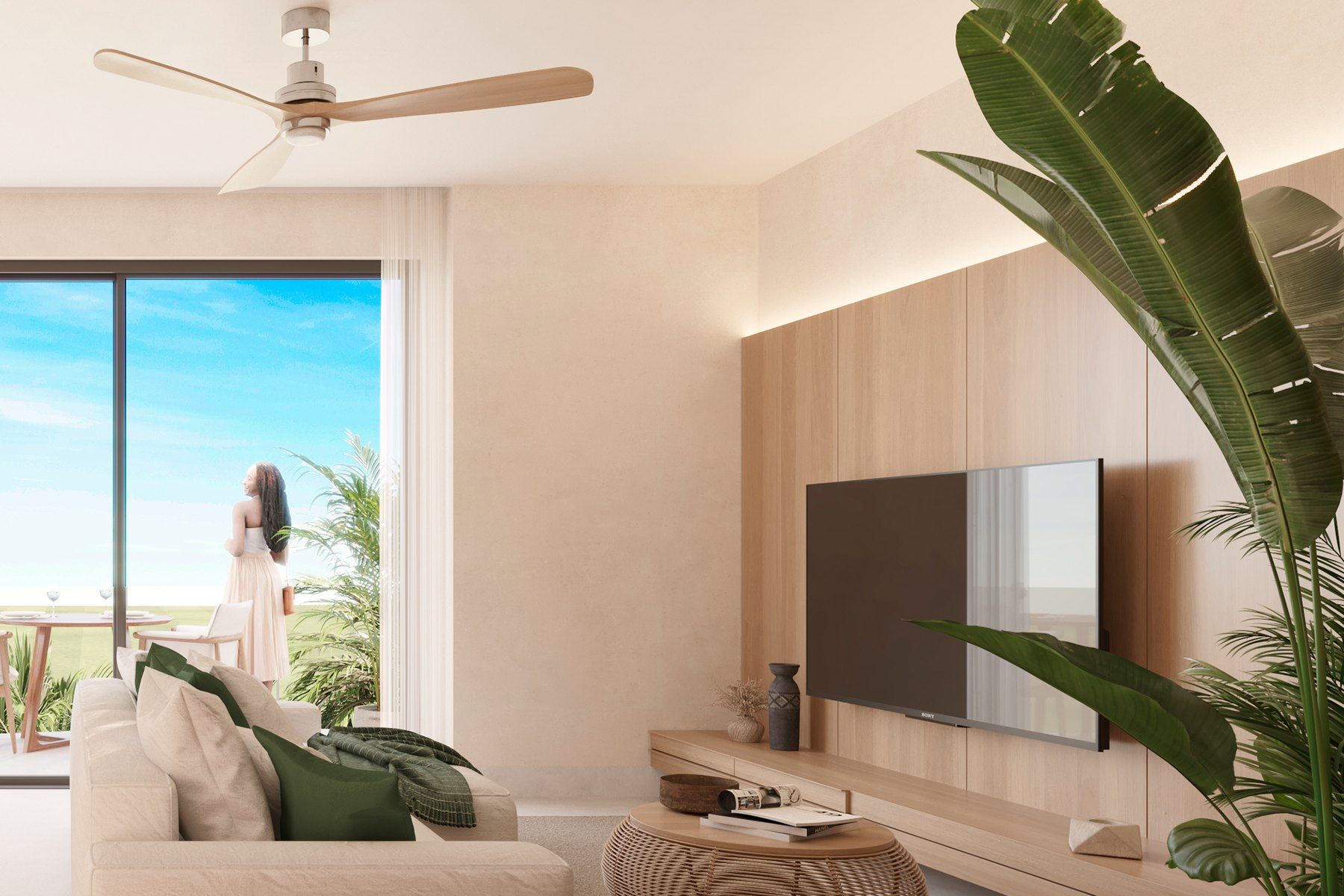
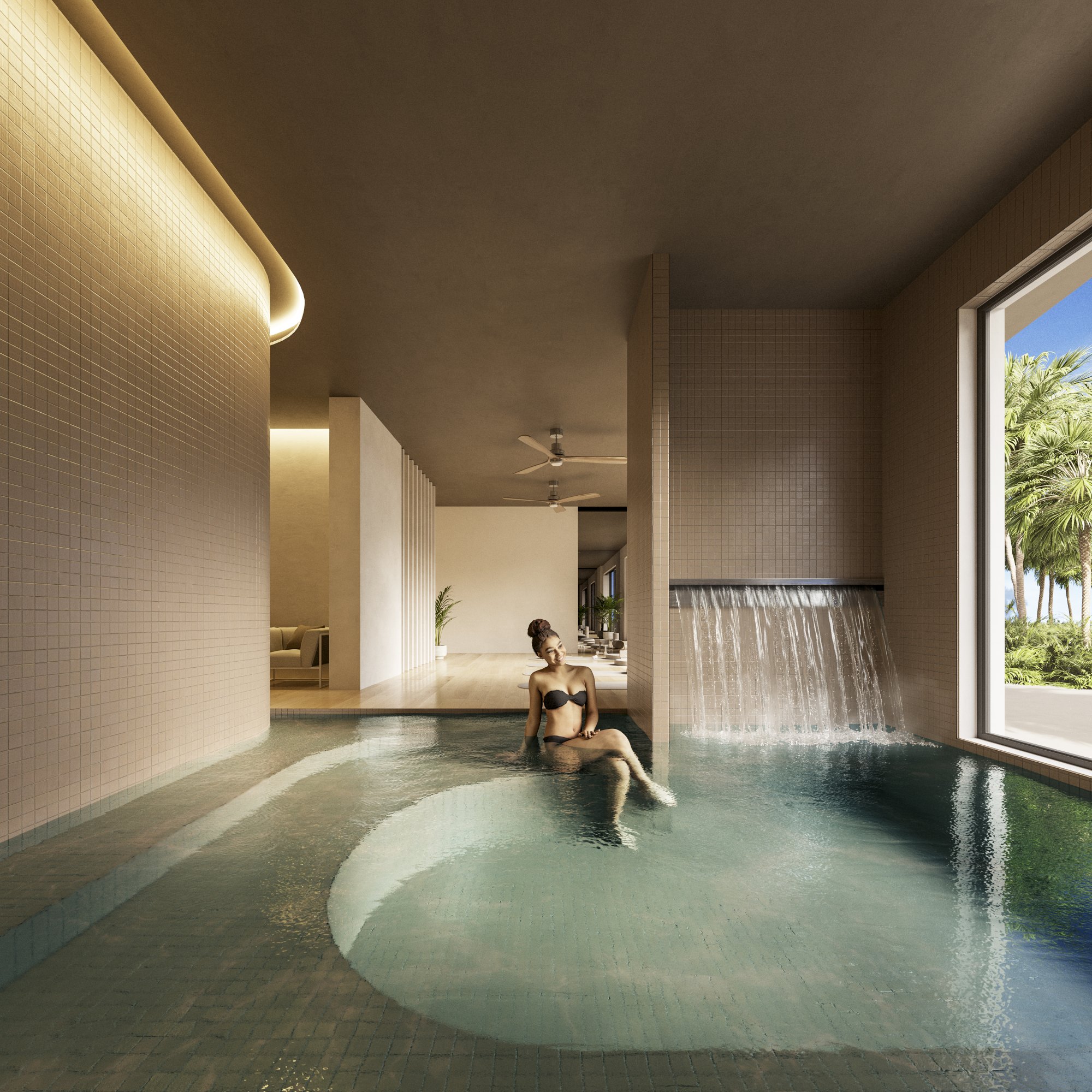
Retirement is mostly ordinary days, so picture them. At Crystal Garden the published amenities keep much of a routine inside the grounds: a spa and wellness centre, a fully equipped gym, pickleball courts, a rooftop pool beside the resort pool, on-site restaurants, a coworking space and a concierge lobby, with the Las Iguanas course at the door. Playa Caracol and Juanillo are about 8 minutes by car, Punta Cana International Airport about 20, and Downtown Punta Cana, with its shops and banks, about 30.
Some everyday costs follow Dominican rules you will meet within a week. Restaurants add a mandatory 10% service charge, the propina legal, as its own line beside the 18% ITBIS, the Dominican value-added tax. At the market, fresh produce sold in its natural state carries no ITBIS, while processed and packaged goods generally do. For video calls home, Cap Cana has its own telecommunications operator running a fibre network, though service should be confirmed for the specific address; across the country, Ookla's index put the median fixed-broadband download at about 74 Mbps in August 2026.
The calendar and the clock count too. Punta Cana's drier season runs from about 29 December to 30 April, with winter highs near 82°F. The Dominican Republic keeps UTC-4 all year, matching US Eastern from March to November, while Costa Rica keeps UTC-6, two hours behind the US East Coast in summer. If family calls shape your week, that gap is worth weighing.
Owning, renting, or a little of both
Many retirees rent for a season before buying, and in either country that is a sound way to test the calendar, the heat and the distance from family. Owning adds a decision renting does not: what the home does while you are away. At Crystal Garden that decision is built in, because the development is set up as a condo-hotel with an optional managed rental programme. You can keep the residence to yourself, or let it during the months you spend elsewhere.
Letting it brings Dominican tax rules into play. Short-term tourist accommodation carries the 18% ITBIS, which the owner letting the residence must account for even when guests book through a website, while housing let for permanent habitation is exempt. A non-resident owner's rental income is subject to a 27% withholding on the gross amount, with no deductions, and rates like these change, so confirm them with a Dominican accountant before relying on any figure. Separately, the development publishes a CONFOTUR exemption, under Law 158-01, from the transfer tax on purchase and from the annual property tax, the IPI, for 15 years from delivery. That is a property-tax exemption; rental income is taxed under the rules above, and how the exemption applies to your unit is a question for your attorney.
Residences at Crystal Garden start from $475,000, two-bedroom interiors begin at about 920 sq ft, and delivery is projected for 2027. If the Dominican side of this comparison fits the retirement you are planning, the enquiry form on the main page is where to ask for floor plans and the residences still available.
Common questions
- Is Costa Rica's beachfront off limits to foreign retirees?
- Not to visit or to rent, but holding it works differently. Under Ley 6043 a belt about 650 ft deep along the coast belongs to the state; its inland part is occupied only by municipal concession, and a foreigner cannot hold one before 5 years of residence in Costa Rica. Ask a Costa Rican attorney how any property you are considering is held.
- Will a hospital near Punta Cana treat me before my insurer pays?
- Do not assume it. Canada's travel advice warns that Dominican medical facilities may ask for payment in advance, or for proof of insurance, before admitting a patient. Carry your policy card, know your insurer's assistance procedure, and in an emergency dial 911.
- Does spending part of the year at Crystal Garden make me a Dominican tax resident?
- Owning a home does not decide it. The Dominican Republic uses 182 days of presence in a year as its tax-residency mark, and residency status and tax residence are separate questions. Keep a record of your days and have a cross-border tax adviser review your plan alongside the rules of your home country.
- Can I bring my furniture into the Dominican Republic without duty when I retire?
- Possibly, and only once. Article 13 of Ley 146-00 lets a foreigner who has obtained Dominican residency import household effects free of tariff duties, limited to what a household actually needs. Buying a property does not qualify you by itself. Applications are made in person to the customs authority, whose published checklist is old, so confirm current requirements before you ship.
Want the details for your own situation?
Ask about availability, layouts or the buying process, and someone from the sales team will get back to you.
Get in touch