The Process of Buying a Residence at Crystal Garden
Buying property in the Dominican Republic is an established process, and foreign buyers can hold freehold title — Crystal Garden publishes 100% foreign ownership. For a pre-construction residence at Crystal Garden, the process involves a few key legal steps, culminating in you holding a registered title to your property, with the added benefit of significant tax exemptions under the CONFOTUR law.
What does 'owning' a residence at Crystal Garden legally mean?
Ownership at Crystal Garden means you hold direct, freehold title to your specific residence. Crystal Garden publishes 100% foreign ownership, and holding title as a non-resident is ordinary practice here — in your personal name or through a legal entity such as a corporation. The precise form your purchase should take is a question for the attorney handling it, and it is worth asking early rather than at closing.
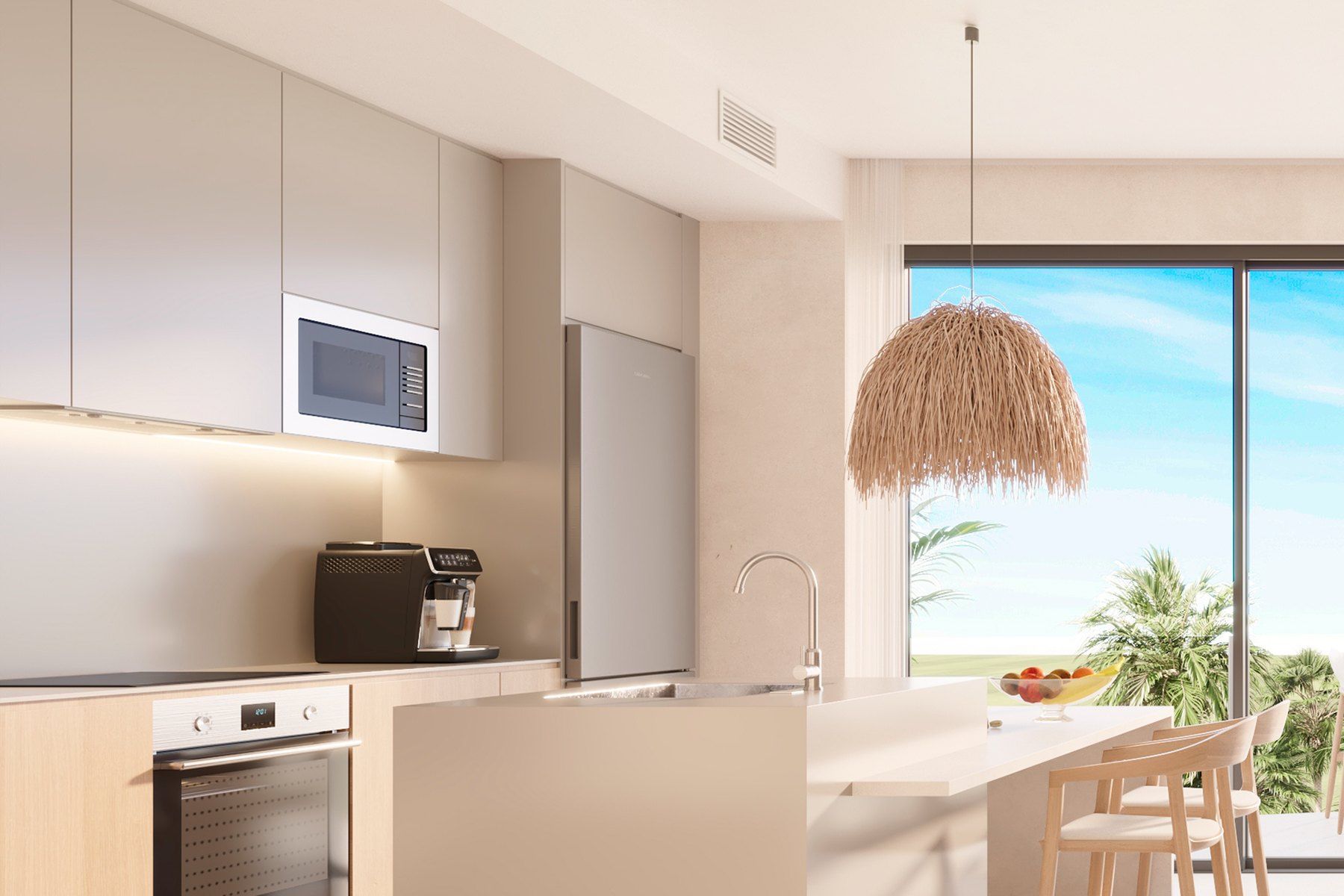
The purchase is transacted in U.S. dollars, and upon completion, your title deed is officially recorded with the national Title Registry Office (Registro de Títulos). That registry is the state-maintained record of who holds the title. Unlike in some other countries, you are not buying a leasehold or a right-to-use; you are acquiring a tangible real estate asset. A two-bedroom residence at Crystal Garden — about 920 square feet of interior space — becomes your titled property, registered under Dominican law. Note that the floor-plan cards quote TOTAL constructed area, interior plus terraces, so the two figures for the same home are not in conflict; check which basis any size you are quoted is using.
What are the key steps for a pre-construction purchase?
Purchasing a pre-construction condo like those at Crystal Garden, scheduled for delivery in August 2027, follows a structured path designed to protect both buyer and developer. The process is overseen by your attorney and a public notary, and it runs in this order:
- Reservation. The specific residence is taken off availability while the paperwork is prepared.
- Due diligence. Your attorney verifies the developer's title to the land, the project's permits, and its CONFOTUR registration — this is the stage that is worth not rushing.
- Promise of Sale. The Contrato de Promesa de Venta is authenticated by a notary. It is the document that binds the developer to deliver the specified residence and you to complete.
- Construction. Delivery is scheduled for August 2027.
- Final deed and registration. On completion the transfer is executed and your title recorded with the Registro de Títulos, with the CONFOTUR exemptions filed so they appear on the title itself.
Commercial terms — what is paid and when — are set in your contract and are a conversation with the sales team, not something this page sets out.
-
Reservation Agreement The first step is to select your residence and sign a reservation agreement. This document takes your chosen unit off the market while your attorney conducts initial due diligence.
-
Promise of Sale (Contrato de Promesa de Venta) Once due diligence is complete, you and the developer sign a formal 'Promise of Sale'. This is a legally binding contract, authenticated by a public notary, that details the property, the purchase price, and the developer's obligation to deliver the finished residence by the agreed-upon date. This is the core document governing the transaction.
-
Construction & Delivery During the construction period leading up to the August 2027 delivery, the developer provides updates on progress. Upon completion, a final inspection of your residence is conducted.
-
Deed of Sale & Title Registration After the final payment is made upon delivery, a definitive 'Deed of Sale' (Contrato de Venta Definitivo) is executed. Your attorney then uses this document to formally register the title in your name with the Dominican Title Registry Office, completing the purchase process.
How do CONFOTUR tax benefits apply to a Crystal Garden purchase?
Crystal Garden is an approved project under the Dominican Republic's Law 158-01, known as CONFOTUR. This law provides significant tax incentives for buyers of qualifying tourism properties. For the first buyer of a residence here, the two primary benefits are:
- Exemption from the 3% Transfer Tax: This tax is normally levied on the transfer of real estate. On a qualifying purchase, this tax is waived.
- Exemption from the 1% Annual Property Tax (IPI): The law provides for a fifteen-year exemption from the annual IPI for qualifying projects. This tax is normally charged on the value of a property above an annually adjusted threshold.
It's important to note that these benefits are not automatic; your attorney must file for them to be recorded on your property's title. What the law is documented to exempt are these property-related taxes. Rental income is assessed under separate rules, and no source we checked says whether the exemption reaches it in either direction — so model rental income as taxed in full and let your attorney settle how any of this lands on your particular purchase.
What are the typical closing costs involved?
Beyond the purchase price of the residence itself, a buyer should budget for closing costs. While CONFOTUR status exempts buyers at Crystal Garden from the largest single cost — the 3% transfer tax — other standard legal and administrative fees still apply. The categories to expect are these:
- Attorney's fees for due diligence, the Promise of Sale, and the closing itself.
- Notary fees for authenticating the contracts.
- Title registration at the Registro de Títulos.
We are deliberately not publishing percentages for any of these. The figures quoted around the market vary widely and we could not source them to anything authoritative, and a made-up range in a closing-cost budget is worse than no range at all. Ask your attorney for a written fee quote and the registry's current schedule before you sign — both are ordinary requests, and the numbers you get that way are the only ones worth budgeting against.
| Cost Component | Description |
|---|---|
| Attorney's Fees | For conducting due diligence, reviewing and preparing contracts, and representing your interests throughout the process. This is typically a percentage of the purchase price. |
| Notary Fees | For the authentication of legal documents, including the Promise of Sale and the final Deed of Sale. |
| Title Registration Fees | Administrative fees charged by the Title Registry Office to issue and record the new title deed in your name. |
| Miscellaneous Expenses | May include minor costs for document stamps, certifications, and other administrative incidentals. |
Can I complete the purchase without traveling to Punta Cana?
Yes, it is very common for international buyers to complete the entire purchase process remotely. This is achieved by granting a limited Power of Attorney (Poder) to your legal representative in the Dominican Republic. This document can be tailored to grant specific, limited powers, authorizing your attorney to sign the necessary purchase documents on your behalf.
The process for executing a Power of Attorney from abroad is standardized. It typically involves signing the document in the presence of a notary in your home country, and then having it apostilled (for signatory countries of the Hague Convention) or legalized at the nearest Dominican consulate. Your attorney will guide you through the exact requirements for your jurisdiction.
What are my options as an owner after the purchase is complete?
Once you take possession of your residence at Crystal Garden, you have complete flexibility. You can use it as a full-time residence, a private vacation home, or place it in a rental program to generate income. Crystal Garden has an optional, in-house rental management program operated by the developer's management arm. Owners can choose to participate, blocking out dates for their own use and making the residence available for rental the rest of the time.
If you choose to rent out your property, it's important to be aware of the tax obligations on that income. Non-resident owners are subject to a 27% withholding tax on gross rental income. Short-term tourist rentals additionally carry an 18% ITBIS (the Dominican VAT), and the host is liable for it rather than the booking platform — a 2025 decree that would have shifted that to the platforms was enacted and then repealed. Rates change, so confirm them for the year you are filing, and take compliance questions to an accountant.
Common questions
- What is a 'Promise of Sale' and why is it important?
- The Promise of Sale, or 'Contrato de Promesa de Venta', is the most critical contract in a pre-construction purchase. Authenticated by a notary, it legally binds the developer to deliver the specified property and the buyer to complete the purchase. It protects both parties by setting out the terms in a formal, notarised document.
- Do I need a Dominican bank account to buy property?
- While not strictly required to complete the purchase itself (as funds can be wired directly for closing), opening a local bank account is highly recommended for managing property-related expenses after you take ownership. It simplifies paying for utilities, HOA fees, and receiving rental income.
- Who are the independent professionals that protect my interests?
- Two key independent parties work for you: your attorney (abogado) and a public notary (notario). Your attorney conducts due diligence and represents your legal interests. The notary is a neutral public official who authenticates contracts, providing legal certainty to the transaction.
Want the details for your own situation?
Ask about availability, layouts or the buying process, and someone from the sales team will get back to you.
Get in touch